


Sprint Interval Training (SIT)
Short, All-Out Efforts with Long Recoveries
Sprint Interval Training (SIT) is one of the most demanding forms of interval training. Unlike HIIT, which usually uses hard but repeatable efforts, true SIT requires maximal, all-out sprints followed by enough recovery to produce another high-quality effort. The work intervals are brief, but the combination of explosive power, rapid fatigue, and long recovery makes SIT highly taxing on both the muscles and nervous system.
SIT relies heavily on anaerobic energy production. The phosphagen, or ATP-PC, system supplies immediate energy during the opening seconds, while fast glycolysis contributes increasingly as a sprint continues. Because the goal is maximal output rather than simply accumulating time at a high heart rate, sprint quality matters more than completing a predetermined number of rounds.
SIT vs. HIIT
HIIT generally uses vigorous or near-maximal efforts that can be sustained and repeated for longer intervals. SIT sits at the extreme end of interval training: the effort is a true 10 out of 10 from the beginning, and the work interval usually lasts only 10 to 30 seconds. If you deliberately hold back so that you can preserve a steady output, you are performing a hard interval, but not a true all-out sprint.
Long recoveries are therefore a defining part of SIT rather than wasted time. Easy movement or passive rest allows phosphocreatine stores to recover, reduces accumulated fatigue, and gives you a better chance of reproducing high power in the next sprint. Cutting recovery too short changes the purpose of the workout from peak sprint quality toward aerobic conditioning or tolerance of repeated fatigue.
The 10-second sprint protocol
A practical short-sprint session uses 10 seconds of all-out work followed by approximately two minutes of very easy pedaling, a work-to-recovery ratio of about 1:12. Six to 10 sprints are usually enough when every effort is genuinely maximal.
These short efforts emphasize the ATP-PC system and explosive peak power. Because the sprint ends before glycolytic fatigue becomes dominant, power tends to decline less than it does during a 30-second effort. The long recovery gives phosphocreatine time to replenish and helps each repetition remain fast and powerful.
When controlling resistance manually (whether on a stationary bike or a smart trainer in non-ERG mode) prepare the resistance before the sprint begins. Increase it during the final two or three seconds of the countdown so that the bike is loaded when the work interval starts, but avoid beginning the all-out effort early. The goal is to accelerate immediately against useful resistance rather than spending the first part of the timed sprint adjusting the bike.
The 30-second Wingate-style protocol
The classic Wingate-style protocol uses a 30-second all-out sprint followed by three to four minutes of passive rest or very easy recovery. Unlike intervals that reward even pacing, a true 30-second SIT effort uses positive pacing: accelerate maximally from the first second rather than saving energy for the finish.
Peak power generally occurs within the first three to five seconds. Output then falls substantially as phosphocreatine availability declines and glycolysis contributes more of the required energy. A pronounced fade is expected and does not mean the sprint was paced incorrectly; power can fall roughly 40% to 50% from its early peak by the end of a maximal 30-second effort.
An interval such as 30 seconds hard followed by only 60 seconds of recovery is a different type of workout. With that much shorter rest, most athletes must pace the efforts to complete multiple rounds. Such sessions can be useful for aerobic conditioning and tolerance of high metabolic stress, but they should not be confused with pure, maximum-quality SIT.
When to end the workout
More repetitions are not necessarily better. Once power or technique deteriorates substantially, continuing adds fatigue while providing less of the explosive stimulus that defines SIT. A practical quality-control method is to compare every round with your best round of the session and apply a conservative “two strikes” rule.
For 30-second sprints, average power is the most useful measure. Consider ending the workout when average power is at least 15% below your best round for two consecutive sprints. For short 10-second sprints, peak power is more relevant. Consider stopping when that peak is at least 10% below your best round for two consecutive sprints. Our HIIT Addict app tracks all this for you.
How HIIT Addict supports Sprint Interval Training
When a connected smart bike or smart trainer provides power data, HIIT Addict evaluates your performance after every sprint.
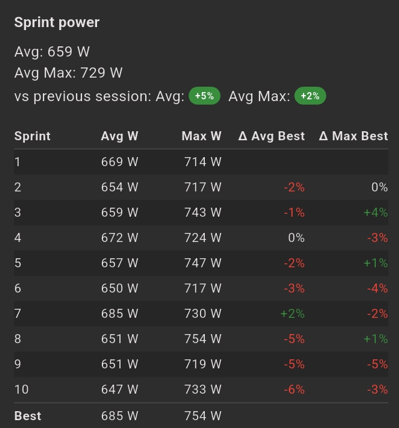
It compares both average power and peak power with your best sprint of the current workout, then in a popup shows how much your output has declined or increased as a percentage change.
If your power falls too much over multiple sprint, the app warns you that sprint quality has deteriorated. Treat that warning as a cue to assess energy and readiness before continuing. The app does not force you to stop, but ending the sprint session may be more productive than completing additional low-quality rounds.

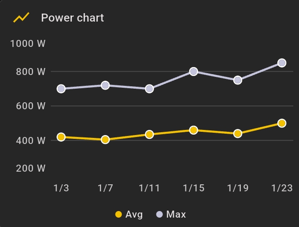
Performance data for every sprint is saved with your workout notes, so you can go back and review individual efforts. The app also plots your SIT sessions on a line chart, tracking your best average watts and best peak watts from one workout to the next. A quick look at the trend line tells you whether your sprint power is actually going up or just feels like it is.
To enable SIT sprint tracking in the HIIT Addict app, your workout must meet two requirements:
- Include at least two interval segments (or custom blocks) with effort set to RPE 10 out of 10 (Rate of Perceived Exertion).
- Connect over Bluetooth to a machine that reports power, such as a smart bike or smart trainer, treadmill, or rower.
 iOS App Store coming soon
What equipment can you use for SIT?
Cycling is one of the most practical ways to perform Sprint Interval Training because it provides a stable, low-impact platform for producing maximal effort. A smart bike or smart trainer is especially useful because it measures power output in watts, making it easier to compare rounds and identify meaningful power decline. A conventional stationary bike or air bike (also known as an assault bike) works well too, although some models may not provide power data. To record and compare your wattage across sprints, you will also need a compatible app such as HIIT Addict that can receive and track your equipment’s power data.
SIT can also be performed on a rowing machine, SkiErg, elliptical, or other equipment that allows brief maximal efforts. Choose a machine you already know how to use safely, because fatigue can quickly expose poor technique. Rowing and skiing machines can provide useful power or pace data, but maintaining sound movement mechanics should take priority over chasing a number.
Running sprints can also be used, preferably outdoors on a suitable surface rather than by making abrupt speed changes on a treadmill. However, all-out running is much higher impact than cycling and places greater stress on the hamstrings, calves, Achilles tendons, and joints. It also carries a greater risk of falling or sustaining a strain, particularly for beginners or anyone unaccustomed to sprinting. Build up gradually and consider cycling or another low-impact machine as the safer starting point for true maximal intervals.
Using SIT safely
SIT is an advanced training method and may not be an ideal starting point for someone new to exercise. Warm up thoroughly with easy movement, progressive increases in intensity, and a few short accelerations before attempting your first maximal sprint. Leave adequate time to recover between SIT sessions, and avoid maximal sprinting when illness, soreness, or fatigue prevents you from maintaining safe technique.
Anyone with a cardiovascular condition, significant risk factors, or uncertainty about maximal exercise should seek appropriate medical guidance before attempting SIT. When used selectively and performed with genuine recovery, SIT can be a highly time-efficient way to train explosive power, anaerobic capacity, and cardiorespiratory fitness without turning every workout into a high-volume endurance session.
Put It into Practice with HIIT Addict
Ready to try sprint interval training? Create and follow sprint interval training workouts (and much more) with a clear, color-coded view of your entire session. Unlike basic workout timers, HIIT Addict visually shows where you are, what lies ahead, and how hard to push. The core features are free, so you can get started without a subscription.Explore everything HIIT Addict can do. Or go download the app directly:
iOS App Store coming soon